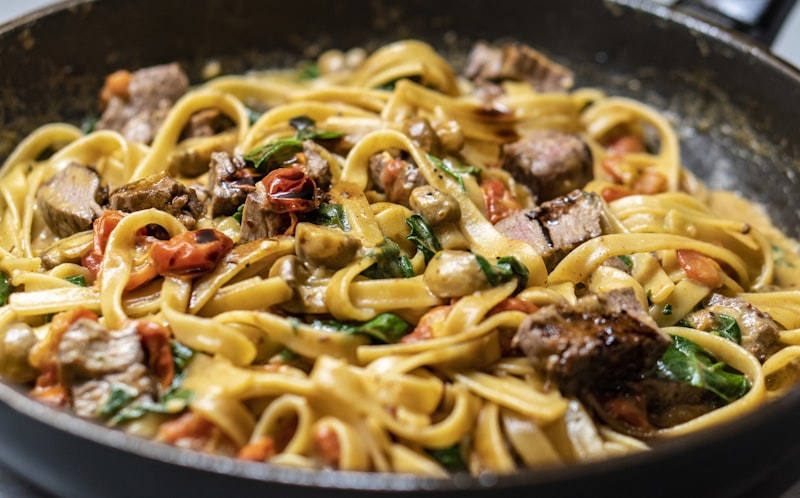
Fresh homemade pasta prepared from scratch using a classic Italian pasta recipe – perfect texture and rich flavor in every bite.
The Ultimate Pasta Recipe Guide: How to Make Authentic Homemade Pasta from Scratch
Are you searching for the perfect pasta recipe that delivers restaurant-quality results right in your own kitchen? You have landed in exactly the right place. Whether you are a complete beginner or a seasoned home cook, mastering a reliable homemade pasta recipe transforms ordinary meals into extraordinary culinary experiences. In this comprehensive guide, you will learn everything from crafting silky fresh pasta dough by hand to pairing your creation with mouthwatering sauces. According to the International Pasta Organization, global pasta consumption exceeds 17 million tons annually, with homemade pasta gaining significant popularity as more people embrace scratch cooking. By the end of this article, you will possess the confidence and knowledge to create authentic Italian pasta that your family and friends will rave about. Let us roll up our sleeves and dive into the art of pasta making.
📋 Table of Contents
- What Makes an Authentic Pasta Recipe?
- Essential Ingredients for the Perfect Pasta Dough
- Step-by-Step Homemade Pasta Recipe
- 5 Classic Pasta Sauce Recipes to Pair
- Common Pasta-Making Mistakes and How to Avoid Them
- Fresh Pasta vs. Dried Pasta: A Detailed Comparison
- Future Trends in Pasta Making
- Frequently Asked Questions (FAQ)
- Conclusion and Final Thoughts
What Makes an Authentic Pasta Recipe?
A truly authentic pasta recipe traces its roots back to Italy, where pasta making has been refined over centuries. The beauty of an Italian pasta recipe lies in its simplicity—traditionally, only two core ingredients form the foundation: semolina flour or '00' flour and fresh eggs. There are no preservatives, no artificial additives, and no complicated techniques that overshadow the natural flavors.
The Italian approach emphasizes the quality of ingredients above all else. When you use premium flour and farm-fresh eggs, your homemade pasta develops a tender yet slightly chewy texture that dried commercial pasta simply cannot replicate. The pasta absorbs sauces more effectively, creating a harmonious dish where every strand or shape carries flavor beautifully.
In regions like Emilia-Romagna—widely considered the heartland of Italian pasta—families have passed down their cherished pasta recipes through generations. Each household guards its unique ratio of egg yolks to whole eggs, the precise kneading time, and the ideal resting period for the dough. Understanding these nuances helps you appreciate why mastering a fresh pasta recipe connects you to a rich culinary heritage.
💡 Pro Tip: The best pasta recipes use a ratio of 100 grams of flour to 1 large egg per serving. This golden ratio ensures your pasta dough achieves the ideal consistency every single time. Memorize this, and you will never need a measuring cup again!
Essential Ingredients for the Perfect Pasta Dough
Before you begin making your pasta recipe, gathering the right ingredients is critical. Each component plays a specific role in creating the texture, flavor, and workability of your fresh pasta dough. Here is a detailed breakdown of what you need and why each ingredient matters:
- '00' Flour (Doppio Zero): This finely milled Italian flour is the gold standard for homemade pasta. Its low protein content (around 8-9%) yields a soft, silky dough that rolls out effortlessly. If unavailable, all-purpose flour works as a suitable substitute, though the texture will be slightly less delicate.
- Semolina Flour: Coarser than '00' flour, semolina adds structure and a pleasant bite to your pasta. Many traditional pasta recipes blend semolina with '00' flour for the best of both worlds—softness with structural integrity.
- Fresh Large Eggs: Eggs provide moisture, richness, and color. For an extra-luxurious fresh pasta, use only egg yolks instead of whole eggs. This technique, common in Northern Italy, creates an incredibly rich, golden pasta.
- Extra Virgin Olive Oil: A small drizzle (about 1 teaspoon per cup of flour) adds elasticity to the dough, making it easier to knead and roll. It also imparts a subtle fruity note.
- Salt: Fine sea salt seasons the dough from within. Do not skip this—pasta without salt tastes flat regardless of how flavorful your sauce is.
- Water (Optional): Only add water if the dough feels too dry and crumbly. Use it sparingly, one teaspoon at a time.
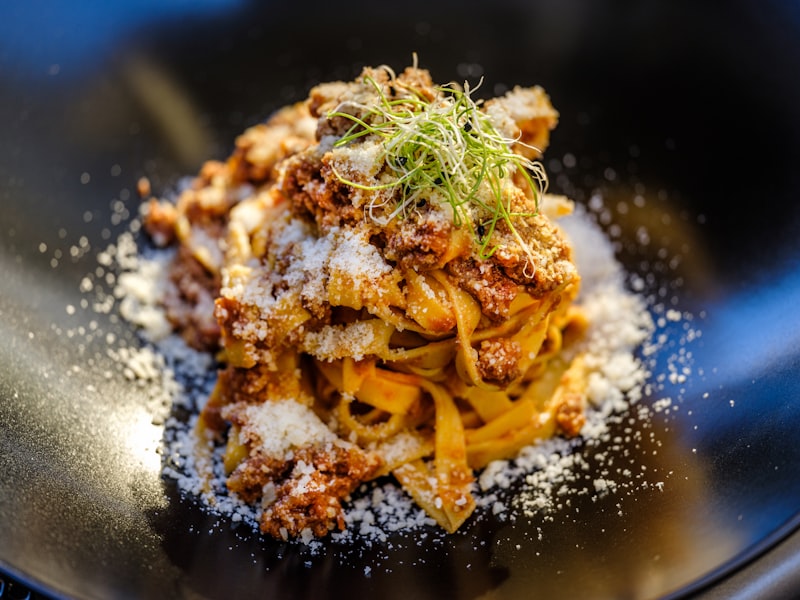
Quality ingredients are the foundation of any great pasta recipe — choose fresh eggs and premium flour for best results.
Step-by-Step Homemade Pasta Recipe
Now comes the exciting part—turning simple ingredients into silky homemade pasta. Follow this detailed pasta recipe carefully, and you will achieve beautiful results on your very first attempt. The process takes approximately 45-60 minutes from start to finish, including resting time.
Ingredients (Serves 4)
- 400 grams '00' flour (or 300g '00' flour + 100g semolina flour)
- 4 large fresh eggs, at room temperature
- 1 teaspoon extra virgin olive oil
- ½ teaspoon fine sea salt
- 1-2 teaspoons water (only if needed)
Step 1: Create the Flour Well
Pour your flour onto a clean, flat work surface—a large wooden board or marble countertop works perfectly. Shape the flour into a mound, then use your fingers to create a wide well in the center, resembling a volcano. The well must be large enough to hold all four eggs comfortably without spilling. This traditional method, used in countless Italian pasta recipes, ensures even mixing from the inside out.
Step 2: Add Eggs and Begin Mixing
Crack all four eggs directly into the well. Add the olive oil and salt on top of the eggs. Using a fork, gently beat the eggs in a circular motion, gradually incorporating flour from the inner walls of the well. Work slowly—rushing causes the walls to collapse and eggs to escape. As the mixture thickens, begin folding in more flour until a shaggy pasta dough forms.
Step 3: Knead the Dough
Once the dough comes together, begin kneading with both hands. Press the dough away from you with the heel of your palm, fold it back, rotate 90 degrees, and repeat. Knead vigorously for 8-10 minutes until the dough becomes smooth, elastic, and springs back when poked. A properly kneaded homemade pasta dough feels like soft leather—supple yet firm. If the dough feels sticky, dust lightly with flour; if it feels dry, wet your hands slightly and continue kneading.
Step 4: Rest the Dough
Wrap the dough tightly in plastic wrap and let it rest at room temperature for 30 minutes. Do not skip this step. Resting relaxes the gluten strands, making the dough significantly easier to roll out. Without proper resting, your dough will resist stretching and snap back repeatedly, causing frustration. This rest period is a non-negotiable element of every reliable pasta recipe.
Step 5: Roll Out the Pasta
After resting, divide the dough into four equal portions. Keep three portions wrapped while working with one. Flatten the portion into a rough rectangle. If using a pasta machine, start on the widest setting, passing the dough through 2-3 times, folding it between passes. Gradually decrease the setting until you reach your desired thickness—typically setting 5 or 6 for fettuccine. For hand-rolling, use a long rolling pin and roll from the center outward, rotating frequently, until the dough is thin enough to see your hand through it.
Step 6: Cut and Shape
Dust the rolled sheet lightly with flour. For fettuccine, loosely roll the sheet into a cylinder and slice crosswise into ¼-inch strips. Unfurl the strips immediately and toss with a bit of semolina to prevent sticking. For pappardelle, cut wider 1-inch strips. Your fresh pasta is now ready to cook or dry for later use.
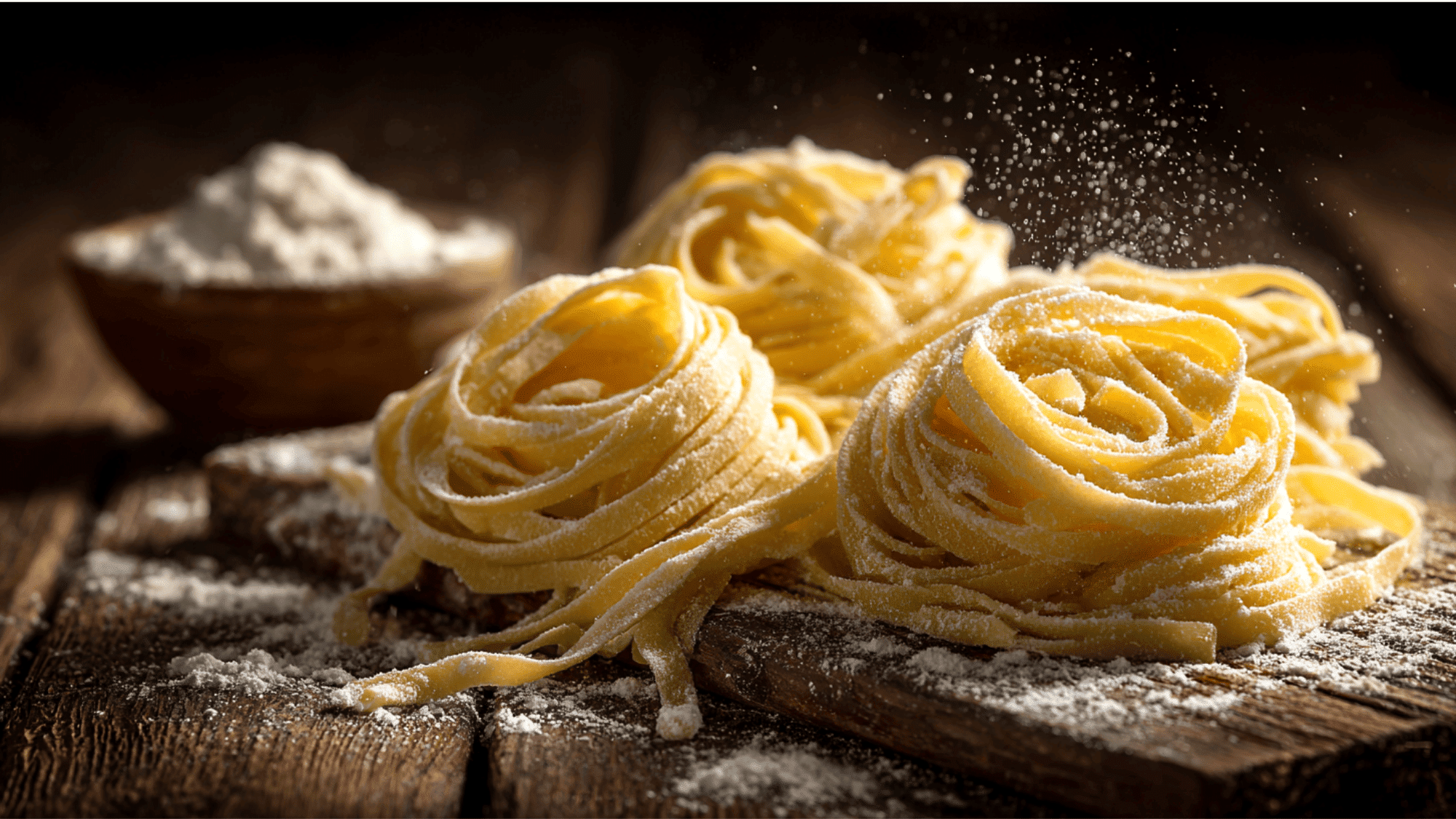
Beautifully cut fresh fettuccine from your homemade pasta recipe — ready to boil in just 2-3 minutes.
Step 7: Cook the Pasta
Bring a large pot of water to a rolling boil. Salt the water generously—it should taste like seawater. This is your only opportunity to season the pasta itself. Fresh homemade pasta cooks remarkably fast, typically in just 2-3 minutes. Watch closely as it rises to the surface; taste a strand to confirm doneness. Drain immediately, reserving at least 1 cup of the starchy pasta water for your sauce.
⚠️ Important: Never rinse fresh pasta after draining unless you are making a cold pasta salad. The starch coating helps sauce cling to each strand. Rinsing removes this precious starch and leaves your pasta slippery and uncooperative.
5 Classic Pasta Sauce Recipes to Pair
A flawless pasta recipe deserves an equally impressive sauce. Here are five classic pasta sauce recipes that complement fresh homemade pasta beautifully. Each sauce can be prepared while your dough rests, making efficient use of your time.
- Aglio e Olio (Garlic and Oil): The simplest yet most elegant sauce. Sauté thinly sliced garlic in high-quality extra virgin olive oil until golden. Add red pepper flakes, toss with cooked pasta, and finish with fresh parsley. This easy pasta recipe takes only 10 minutes and lets the flavor of fresh pasta shine.
- Classic Pomodoro (Tomato Basil): Made with San Marzano tomatoes, fresh basil, garlic, and onion. Simmer for 20 minutes until thickened. This versatile pasta sauce recipe pairs with virtually any pasta shape.
- Carbonara: A rich Roman sauce combining egg yolks, Pecorino Romano cheese, guanciale (cured pork cheek), and black pepper. The key is tossing the hot pasta with the egg mixture off-heat to create a creamy emulsion—never scrambling the eggs.
- Pesto alla Genovese: Blend fresh basil leaves, pine nuts, garlic, Parmigiano-Reggiano, and olive oil. This vibrant green sauce is a cornerstone of Italian pasta recipes from the Liguria region.
- Brown Butter and Sage: Melt butter until it turns golden brown and emits a nutty aroma. Add fresh sage leaves until crispy. Pour over pasta with grated Parmesan. This sauce is especially divine with ravioli or gnocchi.
Common Pasta-Making Mistakes and How to Avoid Them
Even enthusiastic home cooks encounter challenges when trying a new pasta recipe. Recognizing these common pitfalls ahead of time helps you navigate around them confidently. Here are the most frequent mistakes and their simple solutions:
- Mistake: Adding too much flour during kneading, resulting in dry, tough pasta. Solution: Trust the recipe ratios. Add flour only if the dough is genuinely sticky after 3-4 minutes of kneading. Humidity affects flour absorption, so small adjustments are normal.
- Mistake: Skipping the resting period. Solution: Always rest the dough for a full 30 minutes. Set a timer if necessary. This step transforms a frustrating rolling experience into an effortless one.
- Mistake: Rolling pasta too thick. Solution: Fresh pasta expands slightly during cooking. Roll it thinner than you think—around 1-2mm thickness is ideal for most pasta recipes.
- Mistake: Under-salting the cooking water. Solution: Use approximately 1 tablespoon of salt per 4 liters of water. The pasta absorbs seasoning from the water, enhancing its inherent flavor.
- Mistake: Overcooking fresh pasta. Solution: Fresh pasta cooks in 2-3 minutes. Set a timer and taste-test frequently. Mushy pasta cannot be salvaged.
Fresh Pasta vs. Dried Pasta: A Detailed Comparison
Understanding the differences between fresh pasta and dried pasta helps you choose the right type for each dish. Both have their place in Italian cuisine, and neither is inherently superior. The choice depends on the sauce, the occasion, and your personal preferences.
As the table illustrates, homemade pasta excels in dishes with lighter, creamier sauces where its tender texture can be fully appreciated. Dried pasta, with its firm structure, stands up beautifully to robust, slow-simmered sauces. A well-rounded home cook keeps both options readily available.
"Life is a combination of magic and pasta." — Federico Fellini, legendary Italian film director
Future Trends in Pasta Making: Innovation Meets Tradition
The world of pasta recipes continues to evolve as culinary innovation intersects with time-honored tradition. Several exciting trends are shaping how people approach pasta making globally.
Gluten-free homemade pasta has surged in popularity, with alternative flours like chickpea, lentil, and rice flour offering viable options for those with dietary restrictions. Modern pasta recipes now incorporate vegetables directly into the dough—spinach for green pasta, beetroot for vibrant red, and squid ink for dramatic black strands. These natural colorants add subtle flavor and impressive visual appeal.
Technology has also entered the pasta kitchen. Automatic pasta makers with built-in kneading and extruding functions simplify the process for busy home cooks. Meanwhile, the slow-food movement encourages a return to handcrafted techniques, emphasizing mindfulness and connection to food origins. Looking toward global sustainability goals, many producers are exploring regenerative agriculture practices for durum wheat cultivation, ensuring that future generations can continue enjoying authentic Italian pasta recipes with minimal environmental impact.
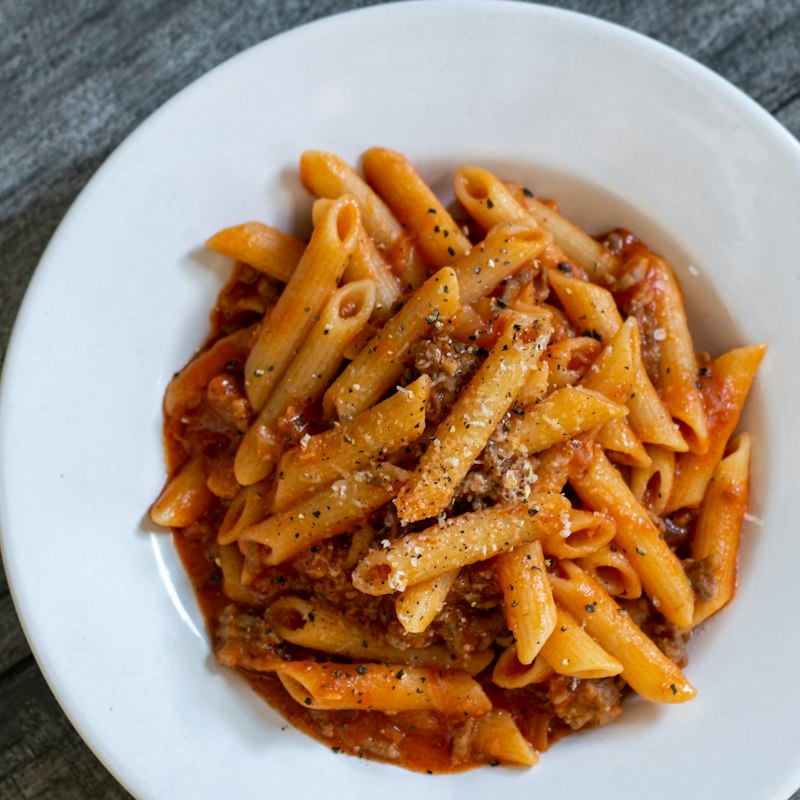
The reward for your effort — a stunning plated pasta dish made from your own hands using this pasta recipe.
Frequently Asked Questions About Pasta Recipes
Q1: Can I make this pasta recipe without a pasta machine?
Absolutely. While a pasta machine makes rolling easier and more uniform, you can roll dough entirely by hand using a long rolling pin. The key is patience—roll from the center outward, rotate frequently, and aim for consistent thinness. Many traditional Italian grandmothers still prefer hand-rolled pasta, believing it yields superior texture.
Q2: How should I store fresh homemade pasta?
Fresh pasta can be stored in the refrigerator for up to 3 days. Dust it generously with semolina flour, form loose nests, and place them in an airtight container. For longer storage, freeze the nests on a tray until solid, then transfer to a freezer bag. Frozen fresh pasta lasts up to 3 months and cooks directly from frozen—just add 1 extra minute to the boiling time.
Q3: Why does my pasta dough keep tearing when I roll it?
Tearing usually indicates that the dough is too dry or that the gluten has not relaxed sufficiently. If your dough tears, lightly mist it with water, knead briefly, and let it rest for an additional 15 minutes. Also ensure you are not rolling too aggressively—gentle, steady pressure produces the best results.
Q4: What is the best flour for an authentic pasta recipe?
Italian '00' flour is widely considered the best for homemade pasta recipes due to its fine grind and optimal protein content. However, a blend of 75% '00' flour and 25% semolina flour delivers excellent results, combining tenderness with a satisfying bite. All-purpose flour serves as a perfectly acceptable alternative when specialty flours are unavailable.
Q5: How much pasta should I make per person?
A standard serving of fresh pasta is approximately 100-125 grams per person for a main course. For a starter or primi course, plan on 75-85 grams. If you are cooking for a crowd, a general rule is that 400 grams of flour plus 4 eggs yields enough fresh pasta to serve 4 adults generously.
Q6: Can I add flavors directly to my pasta dough?
Yes. You can incorporate puréed spinach, tomato paste, beetroot powder, or squid ink directly into the eggs before mixing with flour. For herb-flavored pasta, add finely chopped fresh herbs like rosemary or thyme to the flour. Adjust liquid content slightly—vegetable purées add moisture, so you may need a touch more flour to achieve the correct dough consistency.
Q7: Is fresh pasta healthier than dried pasta?
Both fresh and dried pasta offer nutritional benefits. Fresh pasta contains eggs, providing additional protein and fat. Dried pasta, made solely from semolina and water, is lower in cholesterol and fat. The healthiest choice depends on your dietary needs. Whole wheat pasta—whether fresh or dried—offers more fiber and nutrients than refined flour versions.
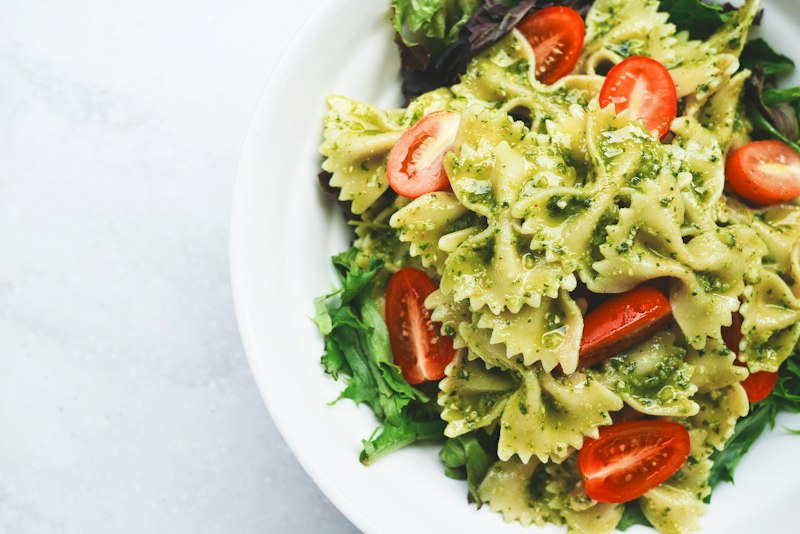
Explore the wonderful variety of pasta shapes you can create from a single master pasta recipe.
Conclusion: Your Journey to Perfect Pasta Starts Today
Mastering an authentic pasta recipe is one of the most rewarding skills you can develop in the kitchen. With just flour, eggs, and a bit of practice, you unlock the ability to create restaurant-quality homemade pasta whenever the craving strikes. The process connects you to centuries of Italian culinary tradition while allowing endless room for creativity and personalization.
Remember the essentials: use quality ingredients, respect the dough's need to rest, salt your cooking water generously, and always save that starchy pasta water. Each time you make fresh pasta, your technique will improve, and your confidence will grow. Soon, you will wonder why you ever relied solely on store-bought dried pasta. Gather your flour and eggs, clear your countertop, and experience the simple joy of crafting your own pasta recipe from scratch. Buon appetito!
🍝 Ready to Make Your Own Pasta?
Save this pasta recipe to your favorites, share it with a fellow food lover, and tag us in your pasta-making photos! For more authentic Italian recipes, subscribe to our newsletter and never miss a delicious update.
📬 Subscribe for More Recipes