Carbonara Without Guanciale or Pancetta: The Complete Guide to Authentic Italian Flavor
Meta Description: Learn how to make carbonara without guanciale or pancetta using simple, accessible substitutes. Discover authentic techniques, ingredient swaps, and a step-by-step recipe that delivers creamy, delicious results every time.
Carbonara without guanciale or pancetta might sound like a culinary contradiction. After all, guanciale—the cured pork jowl—is the cornerstone of Rome's most iconic pasta dish. Yet millions of home cooks worldwide face the same challenge: they crave that silky, peppery, cheese-laden pasta but cannot find guanciale at their local grocery store. Perhaps you live in a region where Italian specialty meats are unavailable, or you simply want a more budget-friendly version of this classic dish. The good news? You absolutely can create an outstanding carbonara without guanciale or pancetta. The secret lies not in the meat itself, but in understanding the technique that transforms simple eggs, cheese, and starchy pasta water into a luxurious sauce. In this comprehensive guide, you will learn every viable substitution, master the emulsification method, and discover why carbonara without guanciale or pancetta can still deliver that authentic Roman experience. Whether you are a beginner cook or a seasoned home chef, these strategies will elevate your pasta game immediately.
Table of Contents
Understanding Traditional Carbonara: What Makes It Authentic
Before exploring substitutes, you must understand what authentic carbonara actually is. The traditional Roman recipe contains only five ingredients: guanciale, Pecorino Romano cheese, eggs, black pepper, and pasta. That's it. No cream, no garlic, no onions, and certainly no mushrooms. The creamy texture that defines great carbonara comes entirely from the emulsification of egg yolks with starchy pasta water and melted cheese.
Guanciale plays a specific role in this equation. It renders a significant amount of fat that coats the pasta and contributes deep, savory flavor. Its high fat content is precisely why it is prized in Roman cooking. When you remove guanciale, you must compensate for both the lost fat and the lost umami. This is the central challenge of making carbonara without guanciale or pancetta.
"The technique that makes carbonara work—egg yolks emulsified with starchy pasta water into a silky, coating cream—turns out to be extraordinarily versatile. The guanciale changes. The method doesn't."
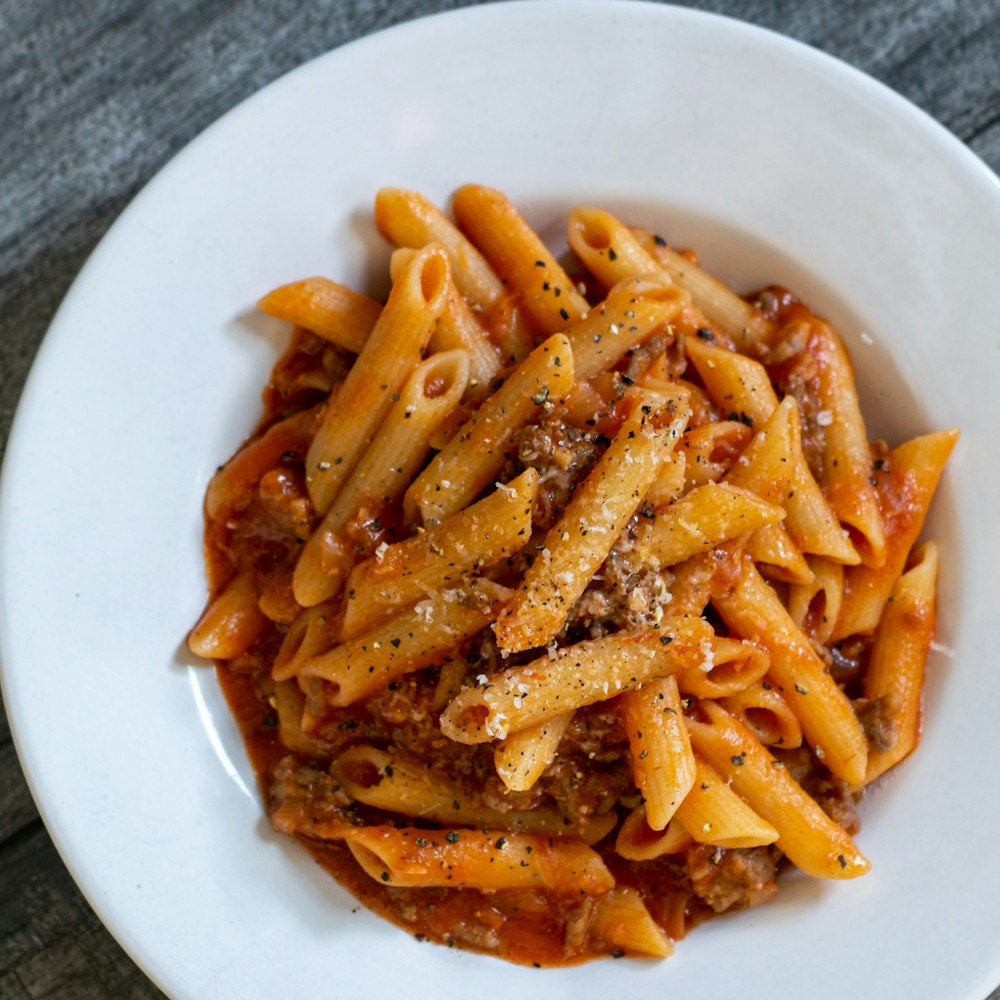
Traditional carbonara relies on the emulsion of eggs, cheese, and pasta water for its signature creaminess.
Best Substitutes for Guanciale and Pancetta
You have more options than you might expect. Each substitute brings its own character to the dish, and understanding these differences will help you choose the right one for your kitchen and your palate.
1. Bacon: The Most Accessible Option
Bacon is the substitute most home cooks reach for first, and for good reason. It is available everywhere and delivers the smoky, salty punch that carbonara needs. However, there is a caveat: American bacon is smoked, which guanciale is not. The smoke flavor can dominate the delicate egg and cheese sauce if you use too much. The solution is simple—use less bacon than your recipe calls for guanciale, or choose an unsmoked variety such as pancetta-style bacon if available.
2. Ham: The Budget-Friendly Winner
Ham lunch meat, particularly thickly sliced deli ham that you cube yourself, is the most budget-friendly option that still delivers excellent flavor. Because ham comes from the same animal as guanciale, you stay within the pork family. Cube it and fry it until the edges caramelize. The downside is that ham renders very little fat, so you will need to add olive oil or butter to compensate.
3. Prosciutto: The Elegant Choice
Prosciutto offers more rendered fat than ham and brings a refined, salty depth to the dish. It will not be as smoky as bacon, but its natural savory character pairs beautifully with Pecorino Romano. Look for thick-cut prosciutto ends or trimmings, which are more affordable than perfect slices.
4. Salami: The Bold Alternative
Chunks of Italian salami work surprisingly well in carbonara. They add a chewier texture and a saltier, more assertive bite. Choose a mild salami to avoid overwhelming the sauce.
5. Smoked Tempeh or Mushrooms: The Vegetarian Route
For a completely meat-free carbonara, smoked tempeh is the closest equivalent to guanciale in terms of texture, rendered-fat quality, and savory depth. Pan-fried king oyster mushrooms offer a simpler but equally satisfying alternative.
💡 Pro Tip: Whichever meat substitute you choose, always fry it first to render whatever fat it contains and to build a flavorful base. This step is non-negotiable in carbonara without guanciale or pancetta. The browned bits left in the pan are pure flavor gold.
Comparison Table: Meat Substitutes for Carbonara
| Substitute | Flavor Profile | Fat Content | Best For |
|---|---|---|---|
| Bacon | Smoky, salty, crispy | High | Maximum flavor impact |
| Ham (cubed) | Mild, sweet, meaty | Low | Budget-friendly everyday cooking |
| Prosciutto | Delicate, salty, refined | Medium | Special occasion dinners |
| Salami | Bold, spicy, chewy | Medium-High | Adventurous palates |
| Smoked Tempeh | Savory, umami-rich | Low-Medium | Vegetarian and vegan versions |
| King Oyster Mushrooms | Earthy, meaty texture | Low | Light, plant-based meals |
Step-by-Step Recipe: Carbonara Without Guanciale or Pancetta
This recipe serves four people and takes approximately 25 minutes from start to finish. It uses bacon as the substitute because it is the most widely available option, but you can swap in any meat from the table above.

The egg and cheese mixture must be whisked into a smooth paste before it touches the hot pasta.
Ingredients
- 400g (14 oz) spaghetti or rigatoni
- 150g (5 oz) bacon, diced (or your chosen substitute)
- 4 large egg yolks plus 1 whole egg
- 100g (1 cup) Pecorino Romano, finely grated
- 50g (½ cup) Parmigiano Reggiano, finely grated (optional, for a milder flavor)
- 1 tablespoon olive oil or butter (if using a lean substitute)
- Generous amount of freshly ground black pepper
- Salt for the pasta water
Instructions
- Prepare the pasta water. Bring a large pot of generously salted water to a rolling boil. Use less water than you normally would—this concentrates the starch, which is essential for a creamy sauce.
- Cook the meat. While the water heats, place your diced bacon in a cold, dry skillet. Turn the heat to medium-low and cook slowly until the fat renders and the pieces turn golden and slightly crispy. If using ham or a lean substitute, add a tablespoon of olive oil or butter to the pan first. Remove the meat with a slotted spoon and set aside. Keep the rendered fat in the pan.
- Make the egg mixture. In a large bowl, whisk together the egg yolks, whole egg, grated Pecorino Romano, and Parmigiano Reggiano until you have a thick, smooth paste. Add a generous amount of freshly cracked black pepper. Set aside.
- Cook the pasta. Add the spaghetti to the boiling water and cook until al dente. Reserve at least one cup of pasta water before draining.
- Combine off the heat. This is the critical step. Remove the skillet from the heat entirely. Add the drained pasta to the skillet with the rendered fat and toss to coat. Then pour the egg and cheese mixture over the pasta and toss vigorously and continuously. The residual heat will cook the eggs gently into a creamy sauce.
- Adjust the consistency. Add reserved pasta water, one tablespoon at a time, while tossing, until the sauce reaches a silky, coating consistency. Do not add too much at once.
- Serve immediately. Return the cooked meat to the pan and toss once more. Divide among warmed bowls and top with additional grated cheese and black pepper.
⚠️ Critical Warning: Never add the egg mixture to the pan while it is still on the heat. Direct heat will scramble the eggs, resulting in a curdled, lumpy sauce instead of a smooth, creamy one. Always work off the heat and rely on the residual warmth of the pasta and pan.
Mastering the Technique: The Real Secret to Great Carbonara
The quality of your carbonara without guanciale or pancetta depends almost entirely on technique rather than ingredients. Here are the principles that separate a good carbonara from a great one.
Temperature Control Is Everything
The single most common mistake in carbonara is overheating the eggs. Egg yolks begin to coagulate at around 65°C (149°F). Your goal is to keep the sauce below that threshold while still achieving a creamy, thickened texture. Working off the heat and tossing continuously ensures even, gentle cooking.
Starchy Pasta Water Is Your Best Friend
The starch released from the pasta during cooking acts as a natural emulsifier. When you whisk pasta water into the egg and cheese mixture, the starch molecules help bind the fat and water together, creating a stable, creamy emulsion. This is why using less water to cook the pasta is beneficial—the water becomes more concentrated with starch.
Cheese Selection Matters More Than the Meat
While you can substitute the meat freely, do not compromise on the cheese. Pecorino Romano is essential for authentic flavor. It is saltier than Parmigiano Reggiano and seasons the pasta dish more effectively. If Pecorino Romano is unavailable, Parmigiano Reggiano will work, but the result will be milder and less authentically Roman. A blend of the two cheeses is a popular compromise that balances saltiness with nuttiness.
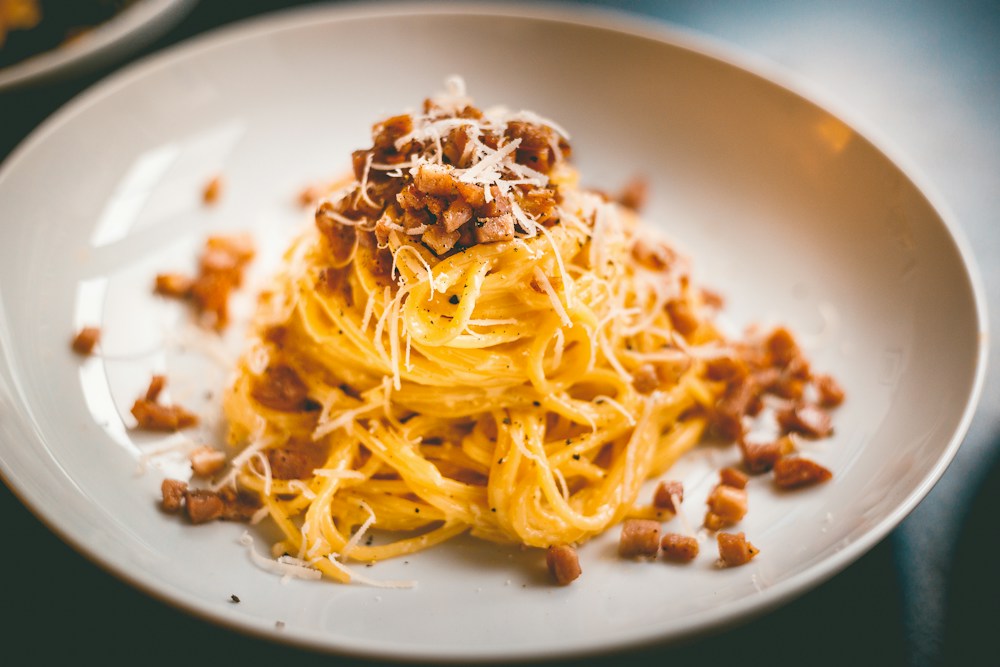
Pecorino Romano provides the salty, sharp backbone that defines authentic carbonara.
Vegetarian and Vegan Carbonara Variations
Carbonara without guanciale or pancetta is naturally suited to vegetarian adaptations. The egg and cheese base provides richness and depth, while vegetables or plant-based proteins can replace the meat.
Asparagus Carbonara
Asparagus carbonara is the most elegant of the vegetable variations. Crisp asparagus spears replace the guanciale, while the egg-and-Pecorino base stays intact. The result feels simultaneously Roman and seasonal, and it works best in spring when asparagus is at its sweetest.
Zucchini Carbonara
For a summer version, zucchini carbonara goes a step further. Some of the zucchini gets blended directly into the sauce, adding a creaminess that makes the dish feel richer than it has any right to be. The rest goes in as slices for texture.
Smoked Garlic and Caramelized Onion Carbonara
One creative home cook discovered that smoked garlic is the missing ingredient for vegetarian carbonara. By adding three cloves of smoked garlic to a base of caramelized onions, she replicated the smokiness that usually comes from the pork, creating a vegetarian carbonara that genuinely satisfies.
Vegan Carbonara
Vegan carbonara requires a complete rethinking of the sauce. Silken tofu, cashew cream, and nutritional yeast can create a creamy, cheesy base without eggs or dairy. For the meat substitute, smoked tempeh offers the closest match to guanciale in texture and savory depth.
Food Safety Considerations for Raw Egg Carbonara
Carbonara traditionally uses raw eggs that are cooked only by the residual heat of the pasta. This raises legitimate food safety concerns that you should understand before preparing this dish.
Raw and undercooked eggs can carry Salmonella bacteria, which causes food poisoning. A scientific study found that spaghetti alla carbonara preparation reduced Salmonella populations by 4.7 log10 CFU/g but did not achieve complete inactivation of the initial bacterial population.
To minimize risk, use fresh, high-quality pasteurized eggs whenever possible. Pasteurized eggs have been gently heated to kill bacteria without cooking the egg. If you are pregnant, elderly, immunocompromised, or preparing food for someone in these categories, use pasteurized eggs and cook the sauce slightly longer, ensuring the eggs are fully cooked. The warmth of the pasta and sauce should cook the eggs through, but if you are concerned, you can briefly warm the egg mixture in a bowl over simmering water before combining it with the pasta.
Frequently Asked Questions
Can I make carbonara without any meat at all?
Yes. The creamy sauce is made from eggs and cheese, not meat. You can create a satisfying meat-free carbonara by using mushrooms, zucchini, asparagus, or smoked tempeh as the savory element. The technique remains the same.
What is the best substitute for guanciale in carbonara?
Bacon is the most accessible substitute and delivers the smoky, salty flavor that carbonara needs. For a more authentic flavor without smoke, pancetta is the closest match. Ham lunch meat is the most budget-friendly option.
Can I use Parmesan instead of Pecorino Romano?
You can, but the result will be milder and less authentic. Pecorino Romano is saltier and sharper than Parmigiano Reggiano, which seasons the dish more effectively. Many cooks use a blend of both cheeses to balance flavor and saltiness.
Why does my carbonara turn into scrambled eggs?
Your pan was too hot. The eggs must be added off the heat. Remove the skillet from the burner completely before adding the egg and cheese mixture, and toss continuously to ensure gentle, even cooking.
Can I add cream to carbonara?
Traditional carbonara contains no cream. The creamy texture comes from the emulsion of eggs, cheese, and starchy pasta water. Adding cream is a common shortcut outside Italy, but it masks the delicate flavors of the authentic dish.
What pasta shape is best for carbonara?
Spaghetti is the canonical choice, but rigatoni, bucatini, and mezze maniche are all traditional Roman options. Choose a shape with ridges or a hollow center to trap the creamy sauce.
Is carbonara safe to eat during pregnancy?
Traditional carbonara with raw eggs should be avoided during pregnancy. If you prepare it with pasteurized eggs and cook the sauce more thoroughly, it can be consumed safely.
Can I prepare carbonara sauce ahead of time?
The egg and cheese mixture can be whisked together and refrigerated for up to two hours before cooking. However, the dish should be assembled and served immediately. Carbonara does not reheat well because the sauce separates.
Conclusion: Carbonara Without Guanciale or Pancetta Is Still Carbonara
Making carbonara without guanciale or pancetta is not a compromise—it is an invitation to understand the dish more deeply. The soul of carbonara lives in the technique: the gentle emulsification of eggs and cheese with starchy pasta water, the generous crack of black pepper, and the alchemy that transforms humble ingredients into something luxurious. When you master this method, the meat becomes a flavor accent rather than the foundation.
Whether you choose bacon for its smoky punch, ham for its affordability, or smoked tempeh for a plant-based version, you are participating in a tradition that has evolved for decades. Carbonara is a global recipe that brings people together, and its versatility allows every cook to make it their own.
Ready to Master Carbonara Your Way?
Try this recipe tonight with whatever meat substitute you have on hand. The technique is what matters—and you now have it.
Get the Full Recipe Card →Share your results in the comments below. What substitute did you use?
Explore More Italian Pasta Recipes
- Cacio e Pepe: The Simplest Roman Pasta You'll Ever Make
- Amatriciana: Spicy Tomato and Pork Pasta from Rome
- Pasta alla Gricia: The Forgotten Ancestor of Carbonara
- How to Make Fresh Pasta at Home: A Beginner's Guide
- The Ultimate Guide to Italian Cheese: Pecorino, Parmigiano, and Beyond
Reliable Sources and Further Reading
Tags
carbonara without guanciale, carbonara without pancetta, guanciale substitute, pasta carbonara recipe, Italian pasta recipes, traditional carbonara, creamy pasta sauce, bacon carbonara, vegetarian carbonara, Pecorino Romano, Roman pasta dishes, easy pasta recipes, carbonara technique, egg pasta sauce, no cream carbonara